Tangible Tools
Tangible “tools” are takeaways given to families by their healthcare provider. They were carefully chosen by a team of experts to reinforce key Greenlight concepts.
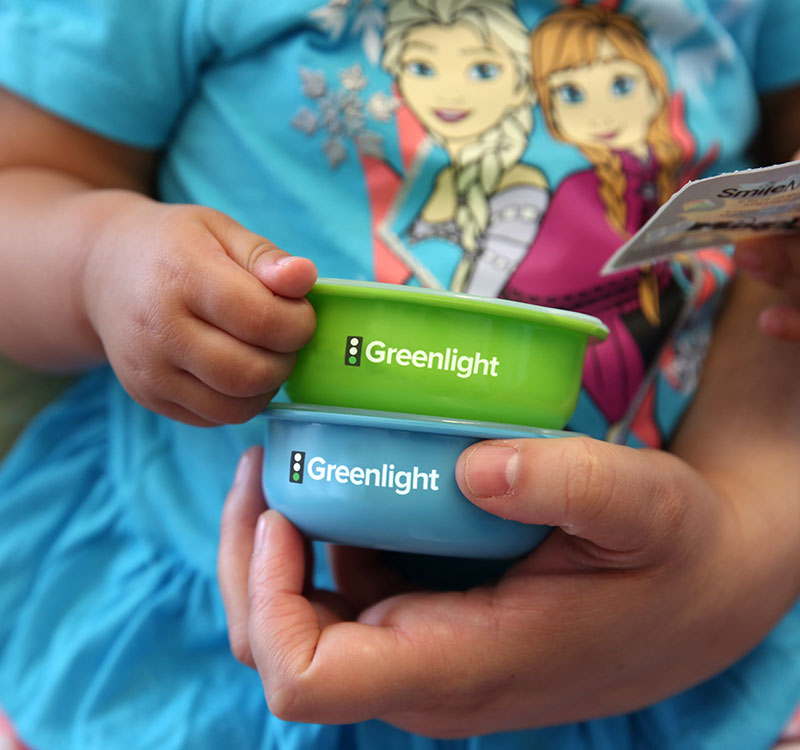
Tangible tools are used to further boost Greenlight messages. At home, these tangible tools serve as reminders of key Greenlight messages. The tools also help parents take action. For example, portion size snack cups introduce parents to the concept of age-appropriate portion sizes and also make it easy for parents to pack healthy snacks. Each tool comes with a card to help explain how the tool can help parents keep their child growing healthy and strong.
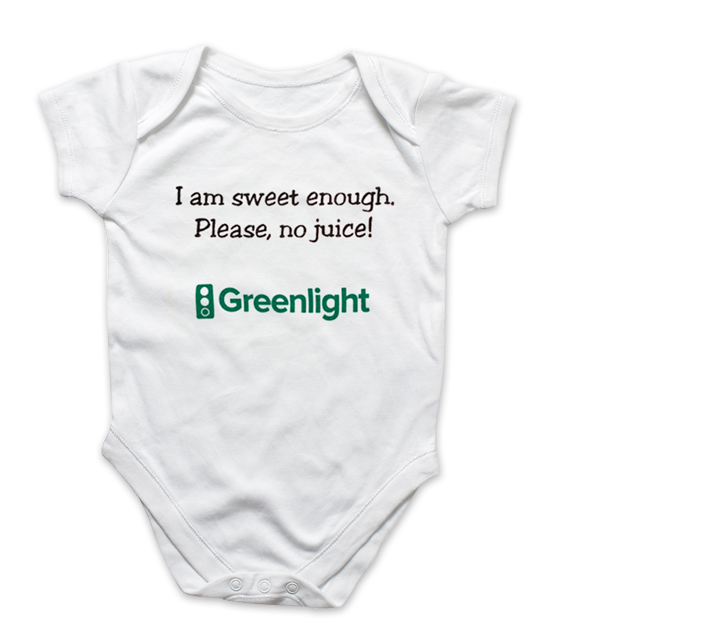
Onesie
A onesie reminds parents: “I’m sweet enough. Please no juice!” Given out at the 2 month check-up, we hope the onesie will remind parents not to give their baby sugary drinks like juice. The premise? Experts believe that children who drink sugary drinks early in life are more likely to develop a habit for sugary drinks when they grow up. The American Academy of Pediatrics recommends limits on juice — no juice for kids less than age 12 months, and no more than 4 ounces for children 1-3 years of age.
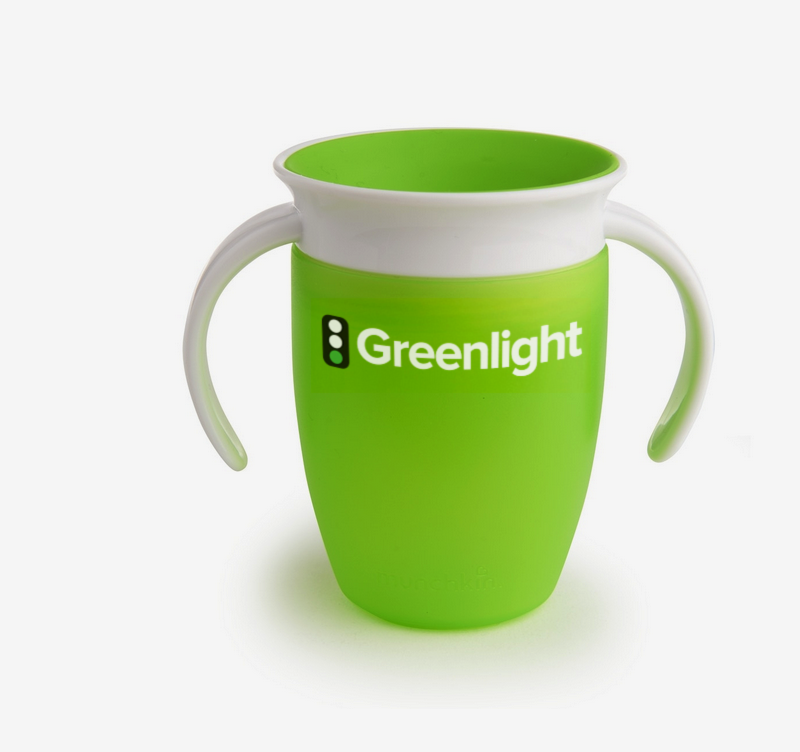
Sippy Cup
A sippy cup is given to parents to encourage them to help their baby make the switch from drinking from a bottle to a cup as early as possible, but no later than 12 months of age. This “first cup” could be given at the 6 or 9 month check-up. Only milk and water should be put in the cup; experts recommend limiting juice. Our goal is to help prevent unlimited access to juice and other sugary drinks from bottles that promote consumption of juice throughout the day.
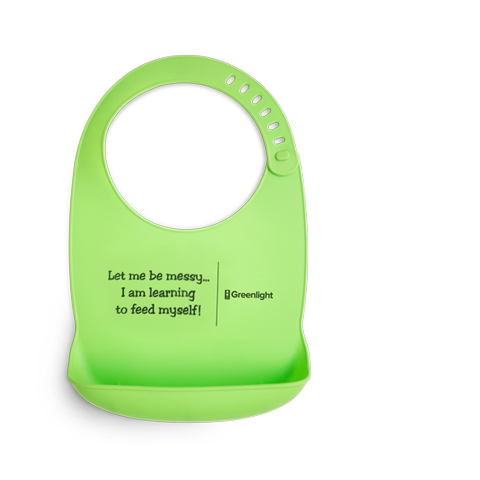
Plastic Bib
A plastic bib is given to parents at the baby’s 9 month check-up to encourage self-feeding. The wording on the bib is as follows: “Let me be messy...I’m learning to feed myself!”
Encouraging self-feeding promotes parent sensitivity to the issue of satiety cues, and the importance of allowing the child to self-regulate intake without interference.
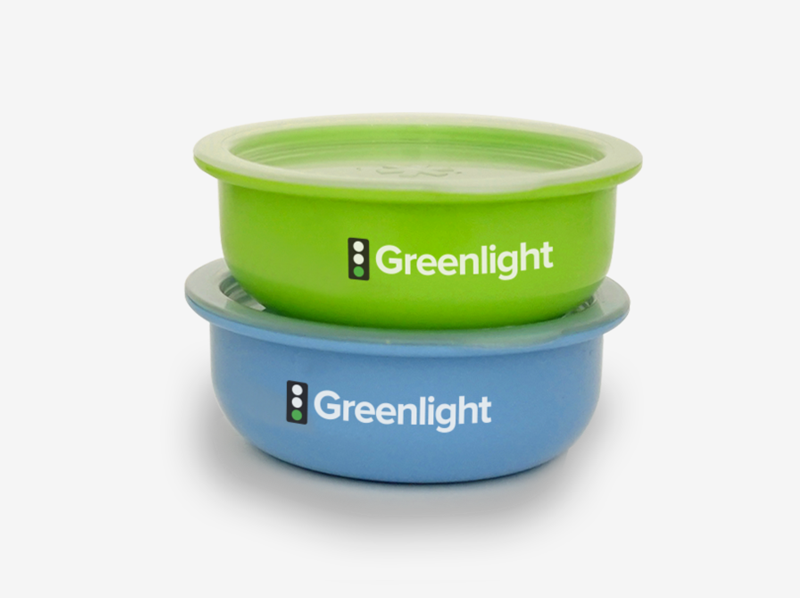
Portion Size Snack Cups
Portion size snack cups are given to parents at the 12 month visit to help reinforce the typical portion size for a 12 month old child (about 1/4 cup, or the size of the child’s fist).
Having snack cups also makes it easier for parents to provide healthy food when on-the-go.
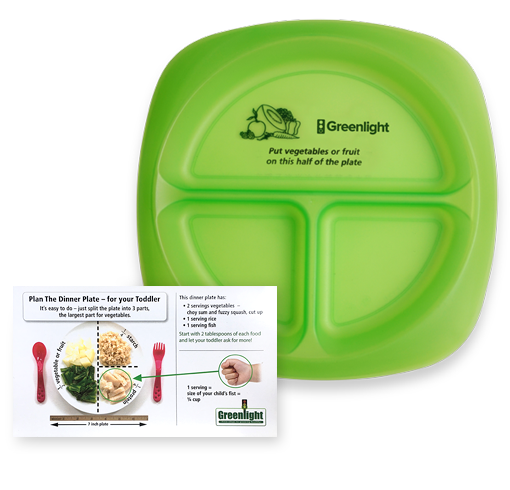
Plan The Dinner Plate
This takeaway reminds parents about how to plan the type and amounts of food to give their toddler at dinner by splitting the plate into 3 parts — the largest for vegetables or fruit. It is given out at the 15-18 month well child check-up. Information on how to plan the dinner plate is also printed onto a magnet for parents to put on their refrigerator. In the original Greenlight toolkit, this was given to families as a placemat.