MENU
  • Overview
  • Booklets
    • Overview
    • Deciding on Key Content
    • Designing the Booklets
    • Browse Booklets
  • Tangible Tools
  • Other Materials
  • Greenlight HELP Activity

Toolkit Components

  • Overview
  • Deciding on Key Content
  • Designing the Booklets
  • Browse Booklets

Designing the Booklets

Booklets were designed using health literacy principles - benefitting both parents and health care providers.

We worked with a team that included parents and providers, along with experts in child health, obesity and health literacy, to ensure that the Greenlight materials were understandable, actionable, and culturally appropriate.

Approach

Content: Action-oriented and Limited in Scope

The booklets are action-oriented, focused on specific behaviors that are recommended for parents.

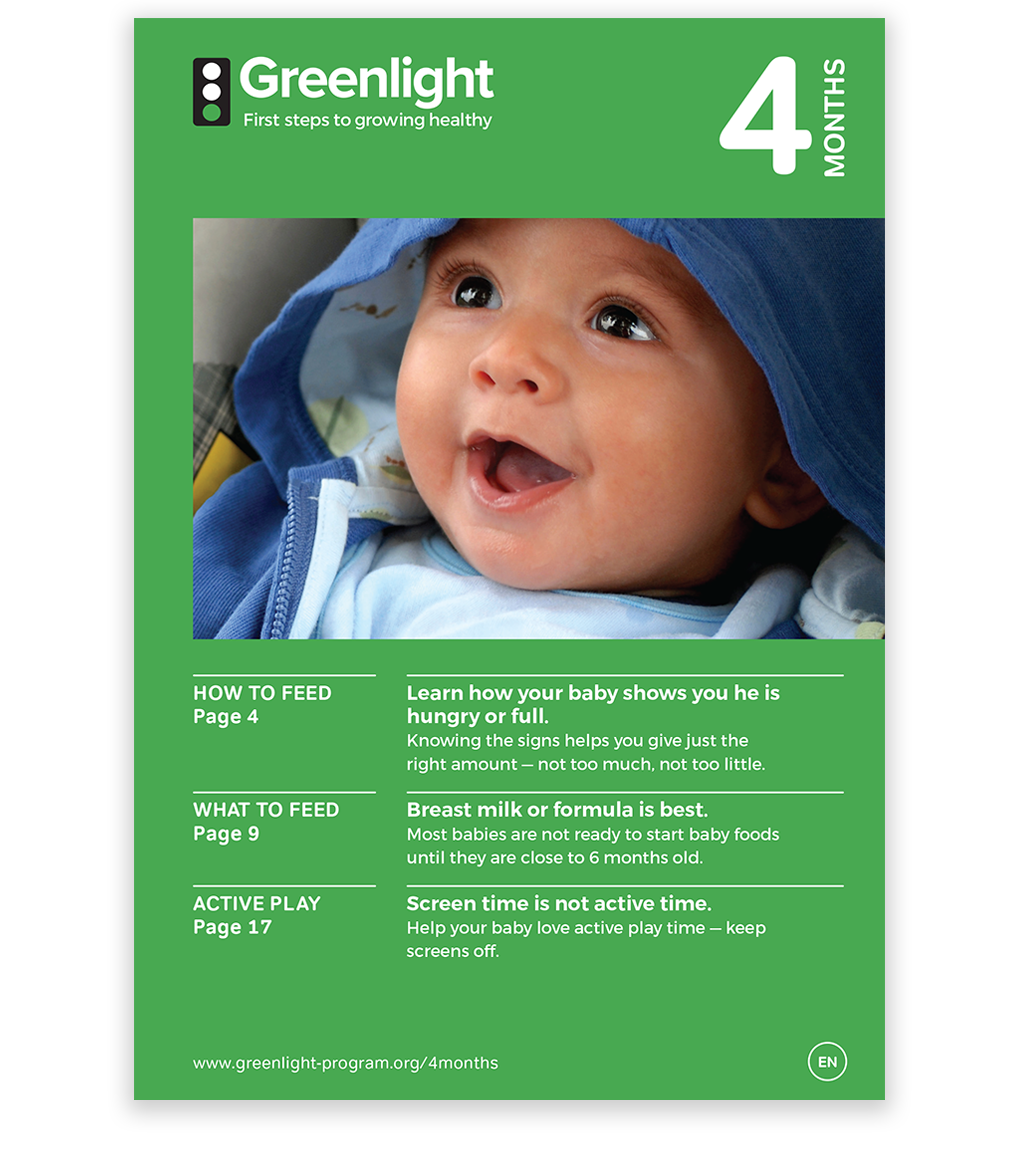
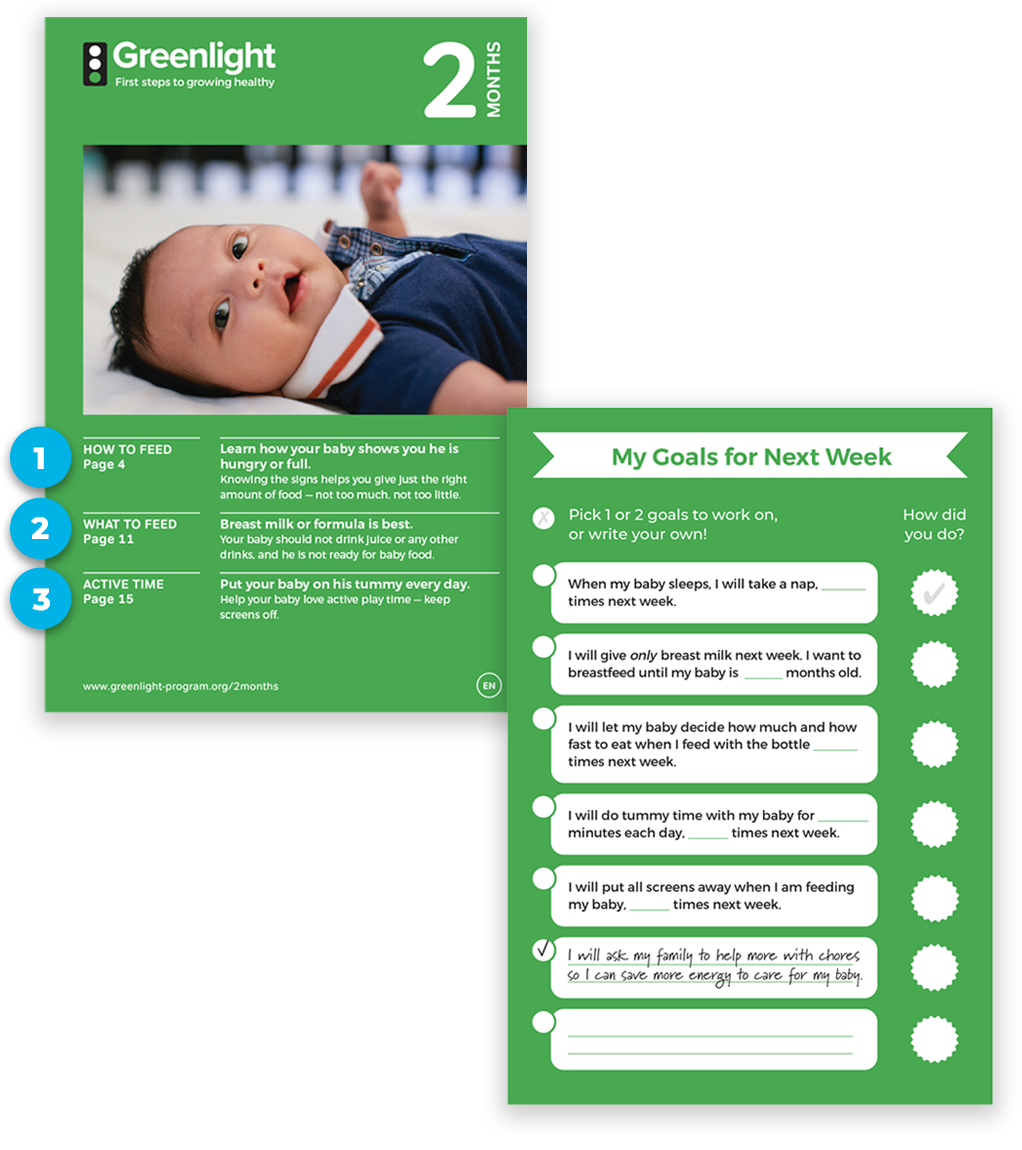
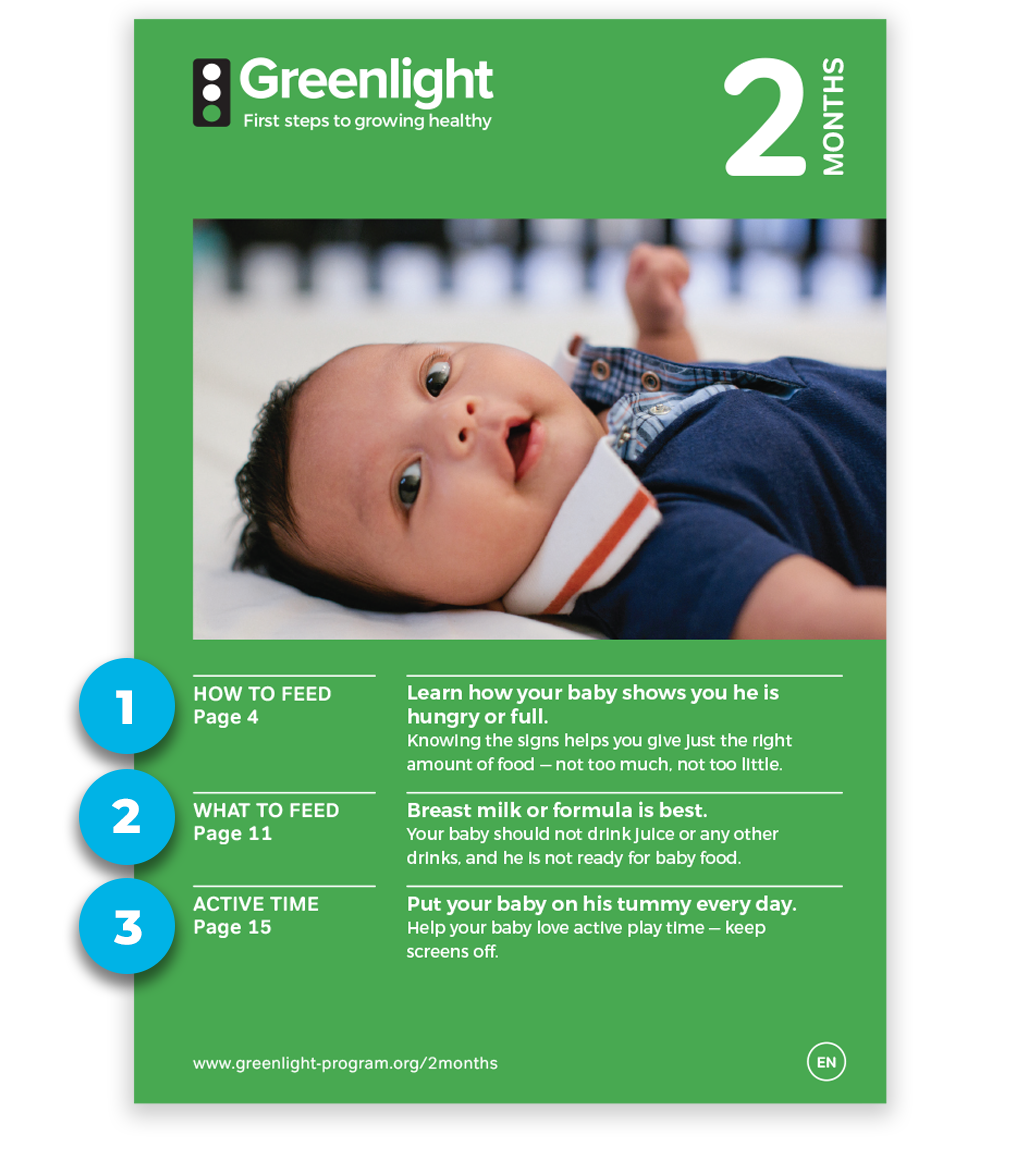
We limited the scope to 3 key messages. These messages are shown on the cover of each of the booklets. Providers are asked to try to cover the 2 messages that the parent is most interested in.
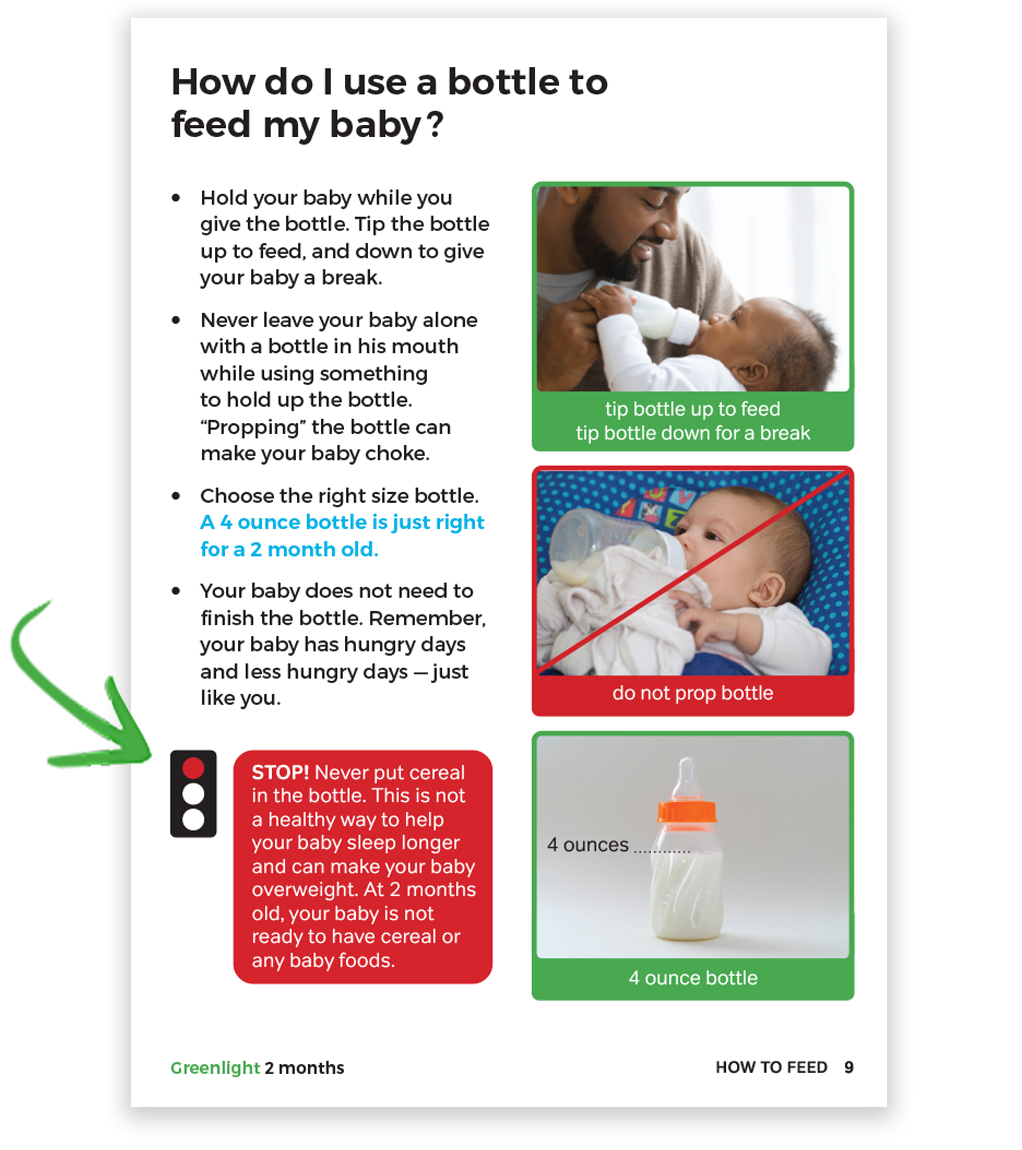
Content: Summary of Key Points

Summaries of key points are used to reinforce Greenlight messages. The messages next to the traffic light icons on the bottom of booklet pages are where parents should look to see the main message of the page distilled into a few sentences.

Providers are asked to cover these messages if they have time.

Literacy level: Easy-to-understand Information Using an Active Voice

Our booklets are written at a 4th to 6th grade reading level. Common words are used so that the information is easy for parents to understand.

We use an active voice to better connect with families. The text also gives providers a "script" to use to more clearly communicate with parents.

Images and Graphics to Support Text

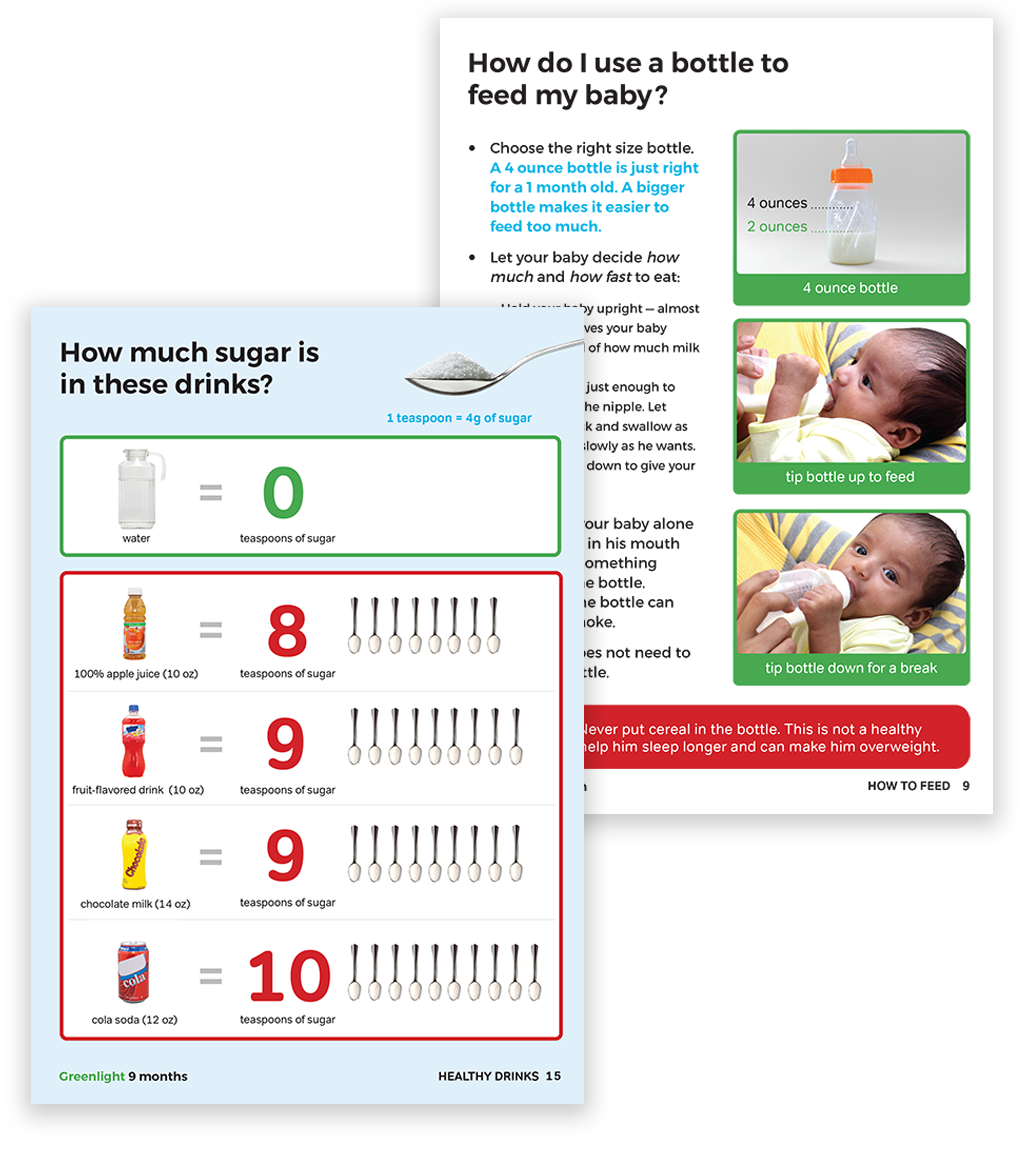
As we developed the materials, we asked parents what would be most helpful. The answer? Photos and graphics to help them visualize how to take action. We carefully chose our images and graphics to best support the words on each page.

Images and Graphics to Support Text: Example 1

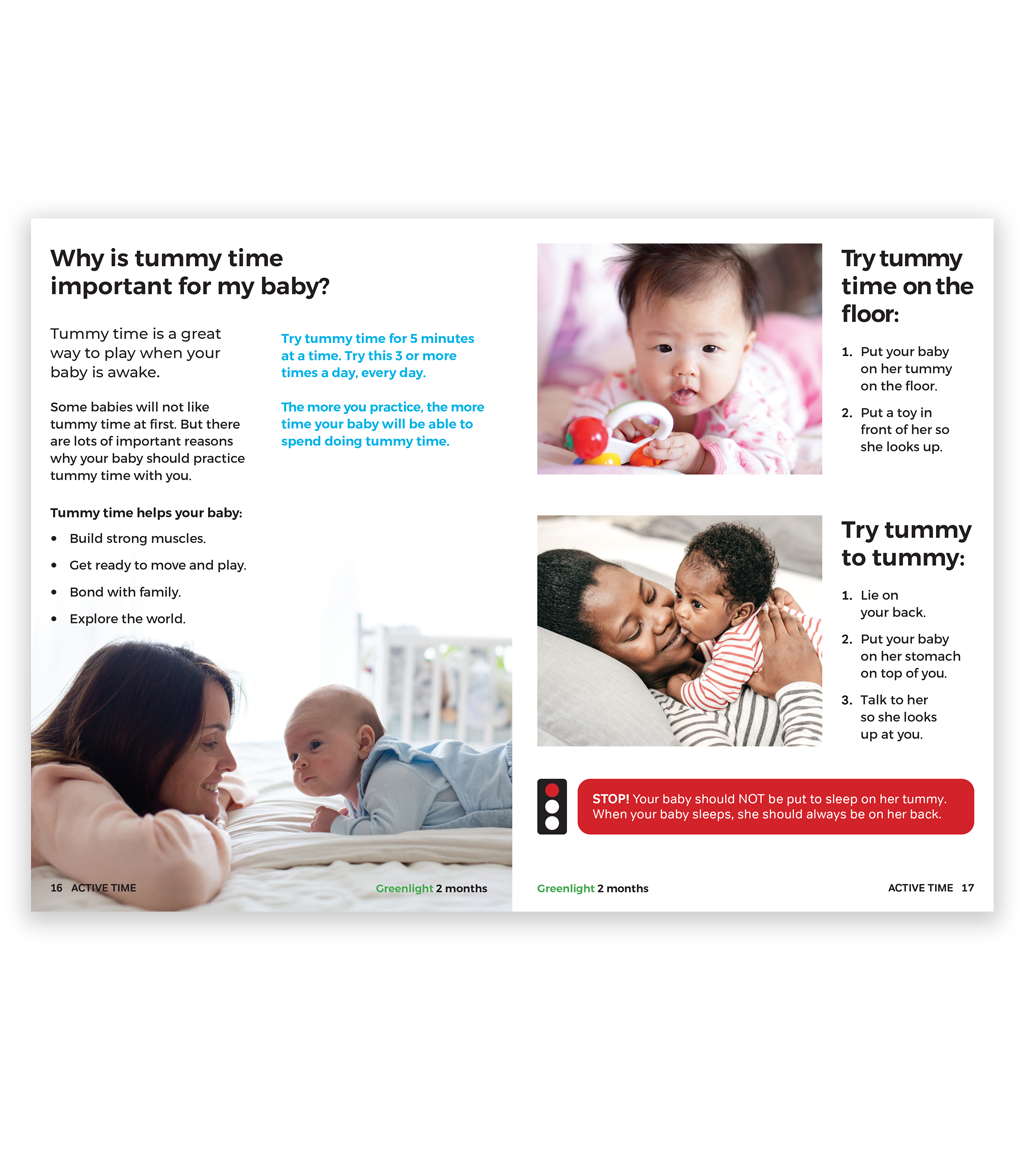
Tummy time is an important way for babies to strengthen their muscles. Many parents see their baby looking uncomfortable during tummy time and worry that their baby is not yet strong enough to do tummy time. The photo in the Greenlight booklet helps to show parents what a 2 month old might look like when doing tummy time. It doesn’t look easy but it is an important way for babies to be active and grow strong.

Images and Graphics to Support Text: Example 2

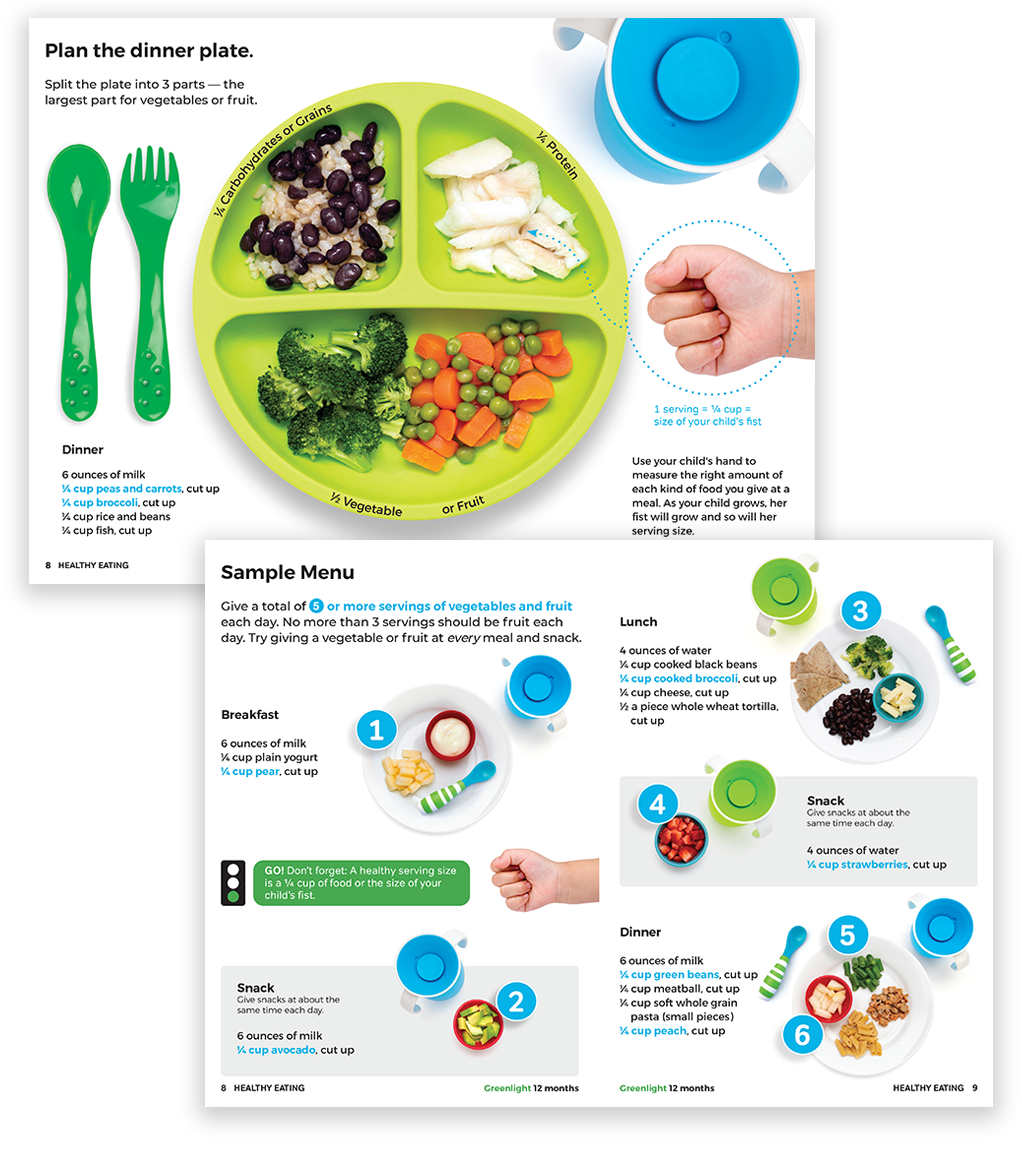
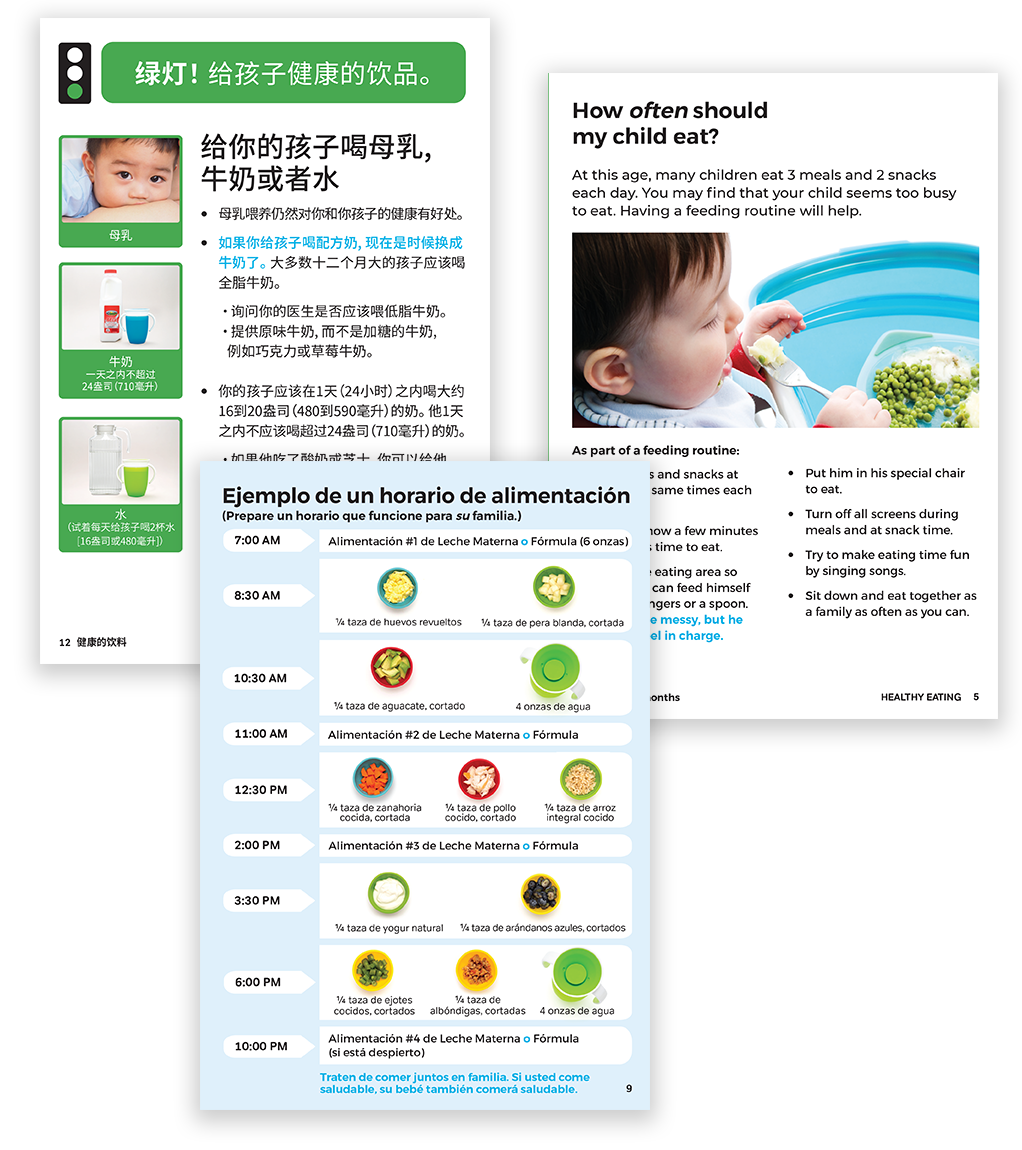
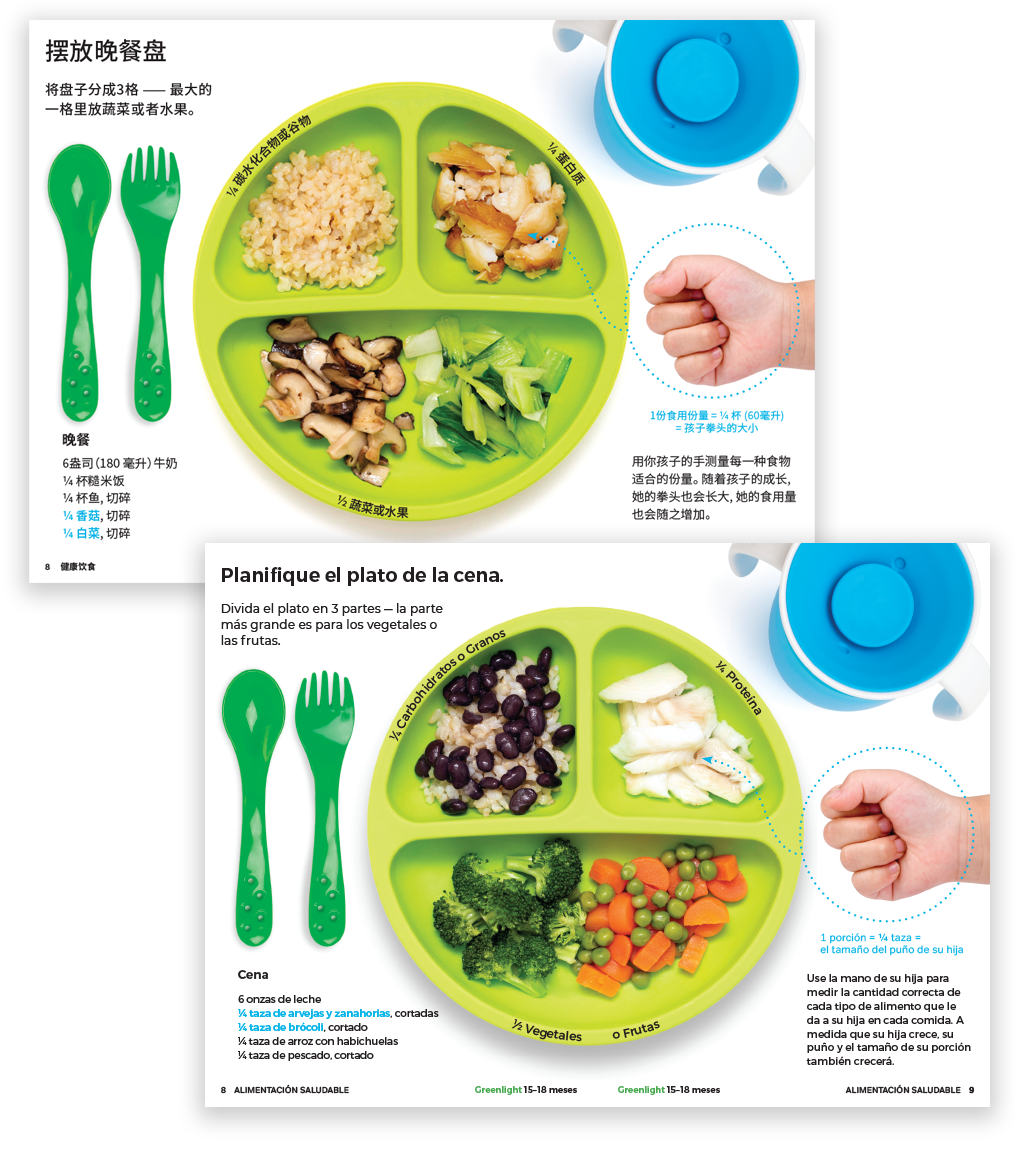
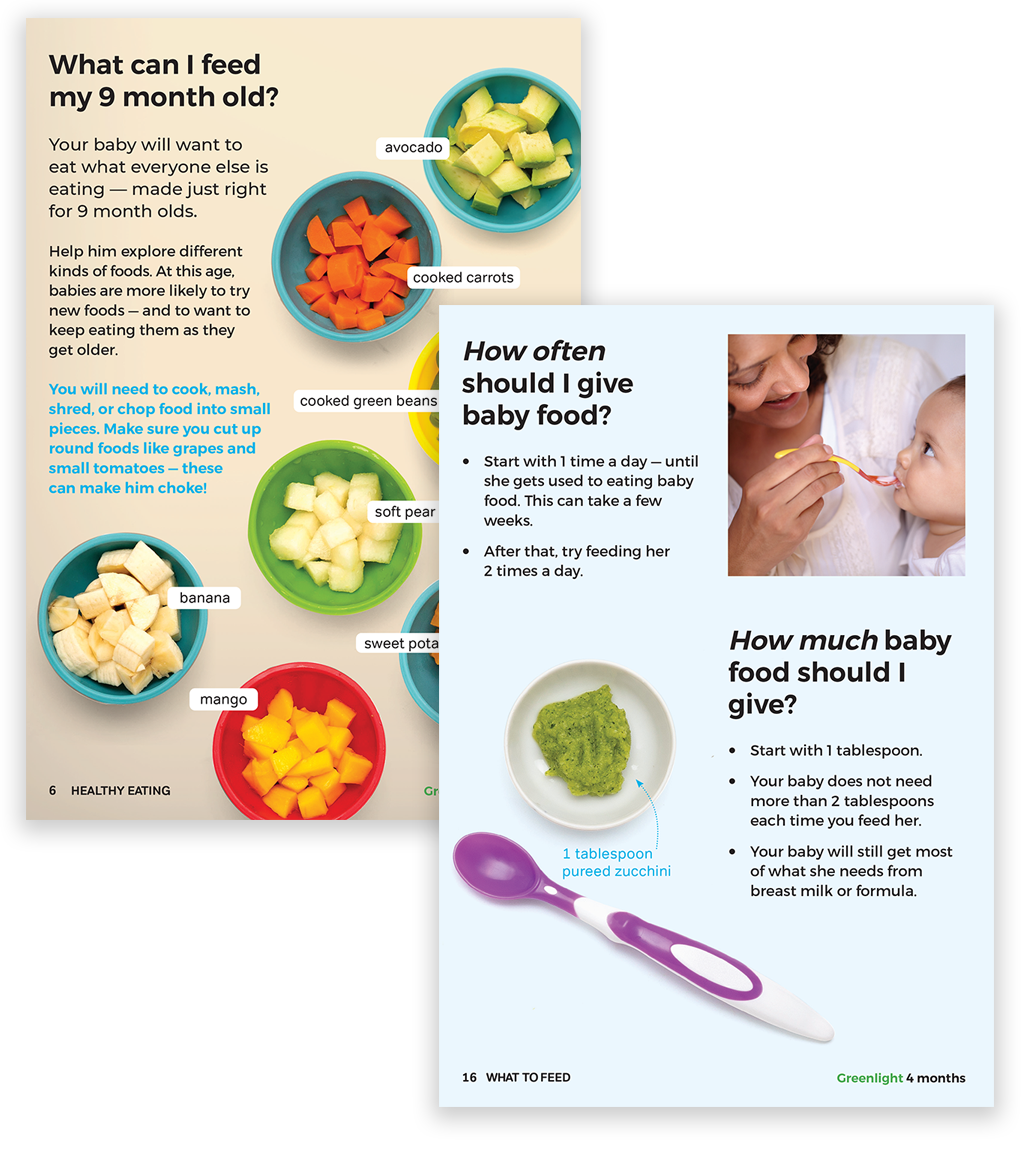
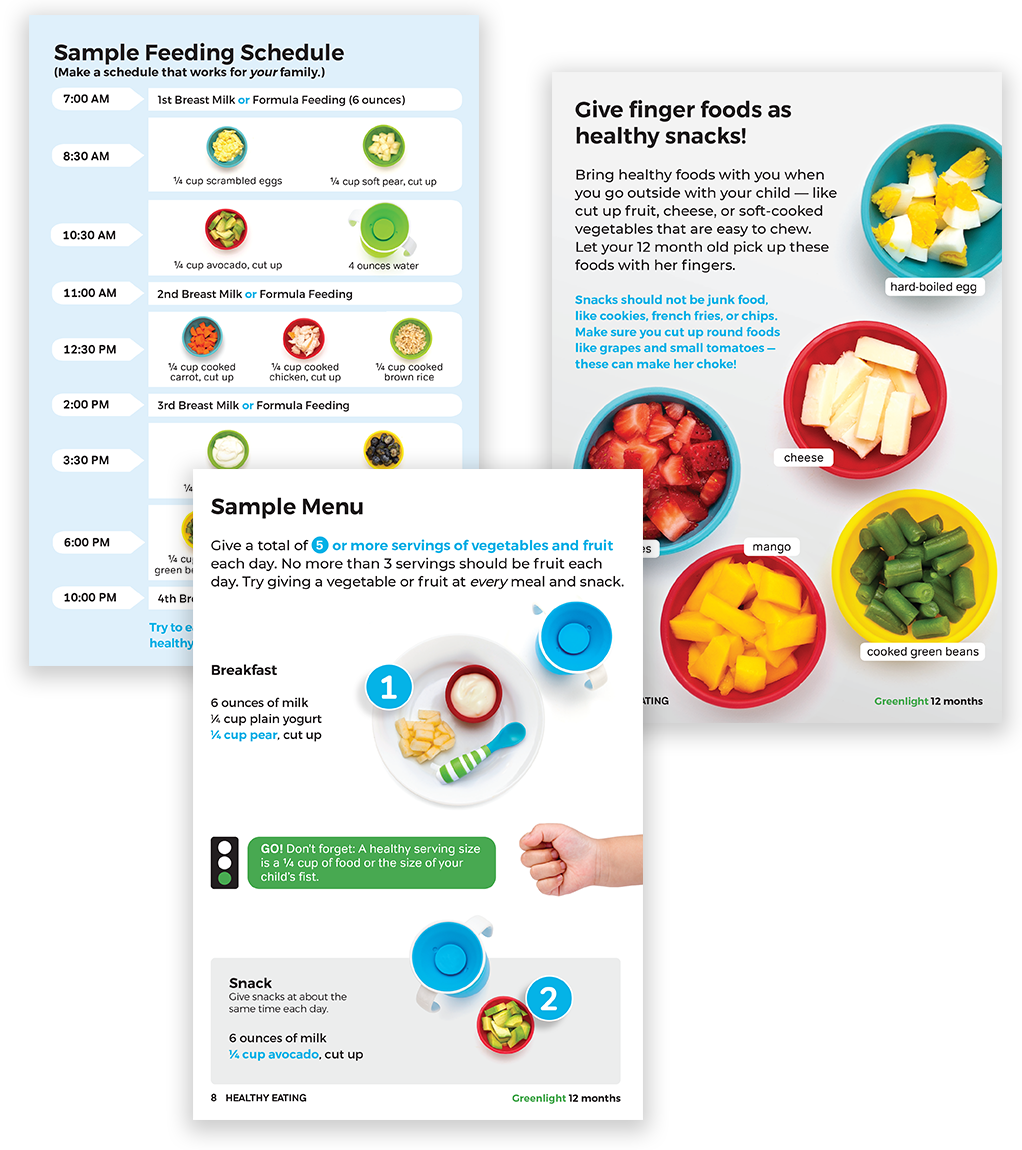
We use photos to show parents what kinds of healthy foods to try and what amount is best for children at each age. Menus with images of food help parents get concrete ideas of how they might provide healthy meals, including how they might fit 5 servings of fruit or vegetables in 1 day.

Layout & Typography: Use of Color to Support our Messages

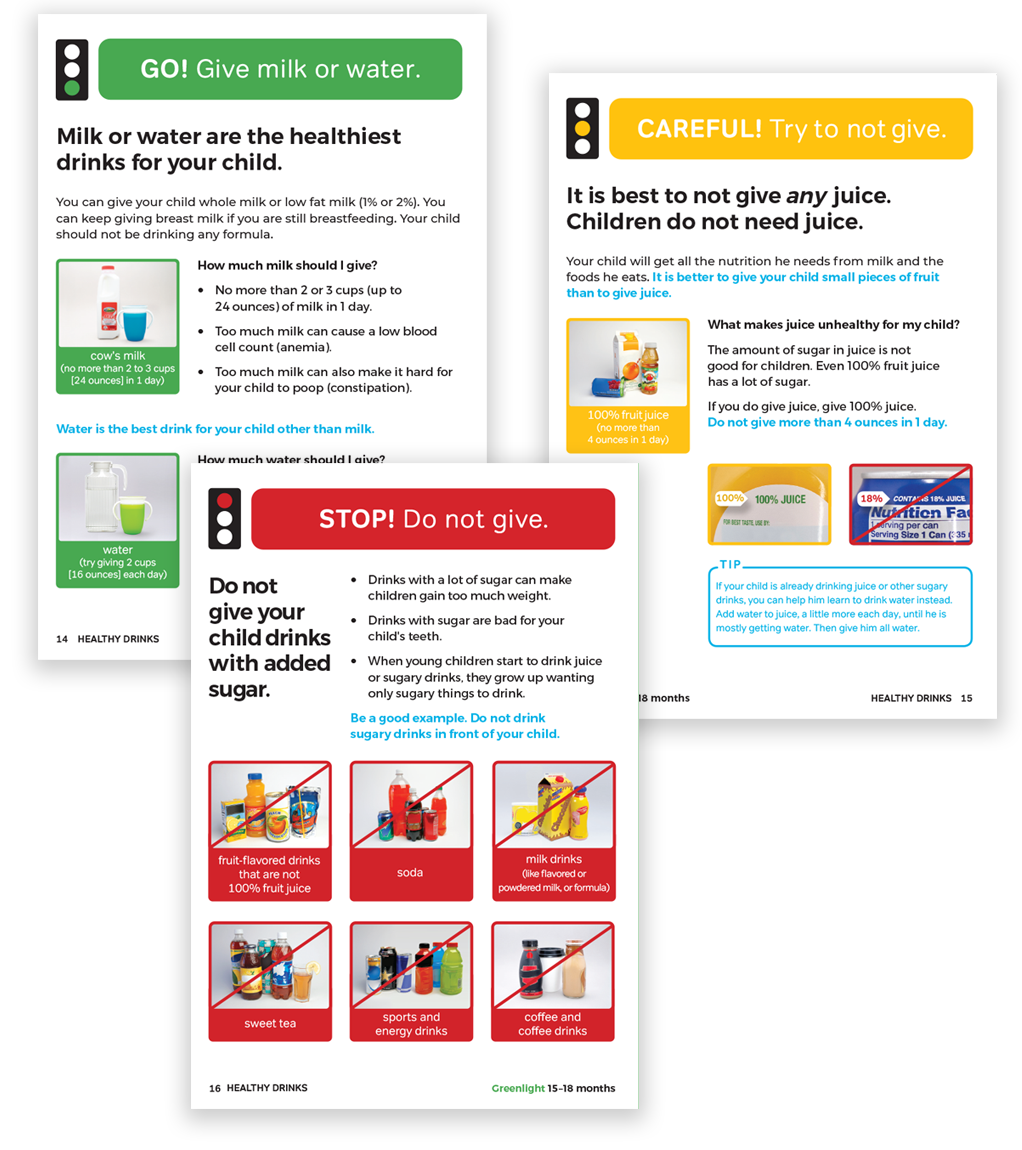
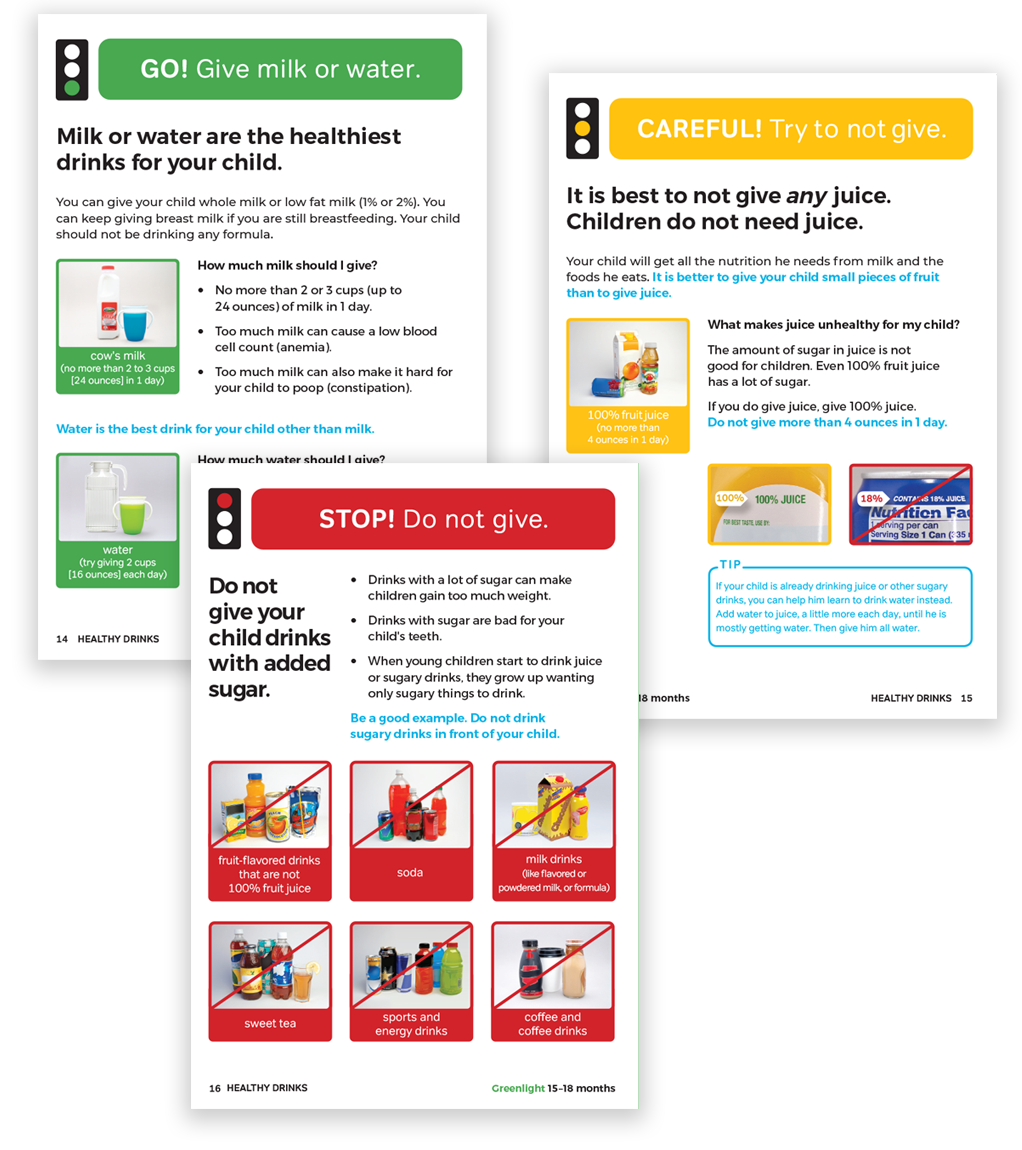
We use a traffic light color theme to support our messages:

Green = Good for your baby! Give your baby

Yellow = Not so good. Try not to give.

Red = Bad for your baby. Don’t give!

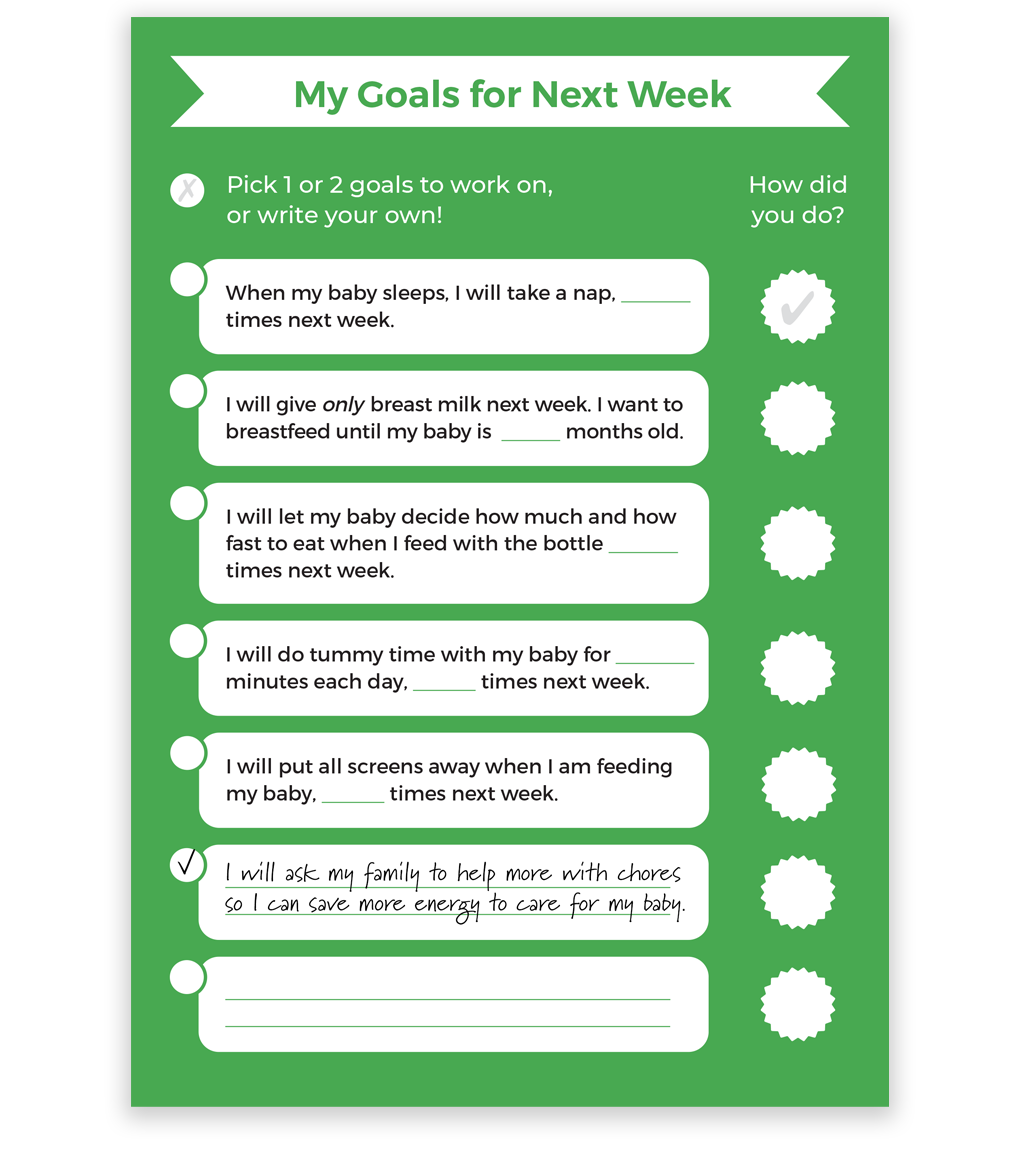
Goal-setting: Helping to Stimulate Learning and Motivate Parents

On the last page of each “core” booklet, parents can work with their doctor (or another healthcare provider) to set a goal. Parents are asked to think of 1 or 2 things they would like to do in the next few weeks. Providers are asked to help parents to make specific goals with a time frame, and to write the goal down on the back of the booklet.

Cultural Adaptation

Cultural Appropriateness – Messages

We worked closely with families, doctors, nutritionists, health educators, and other health care providers to ensure that Greenlight messages were culturally appropriate. The booklets underwent an iterative and collaborative process of design and revision.

Cultural Appropriateness – Example

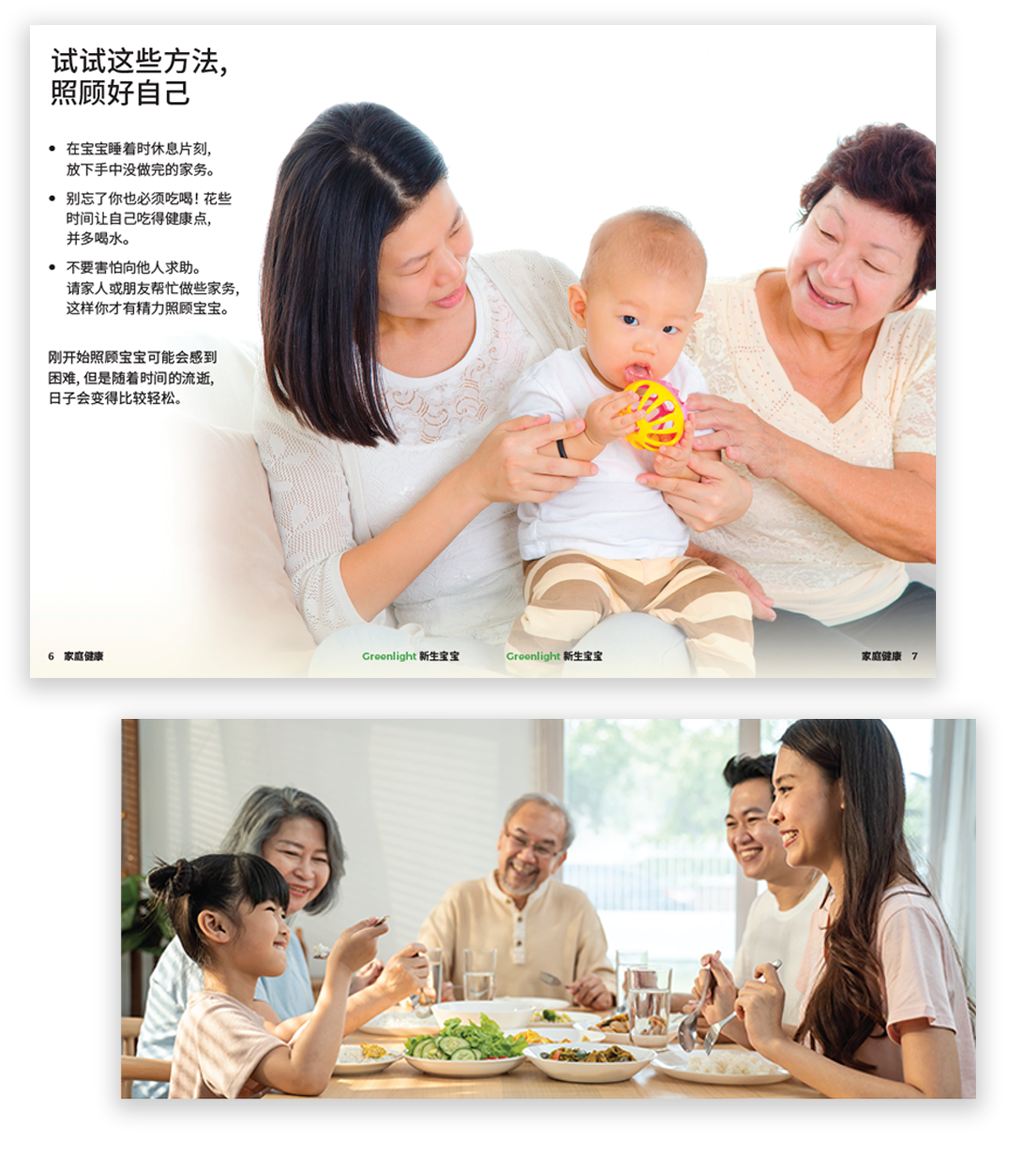
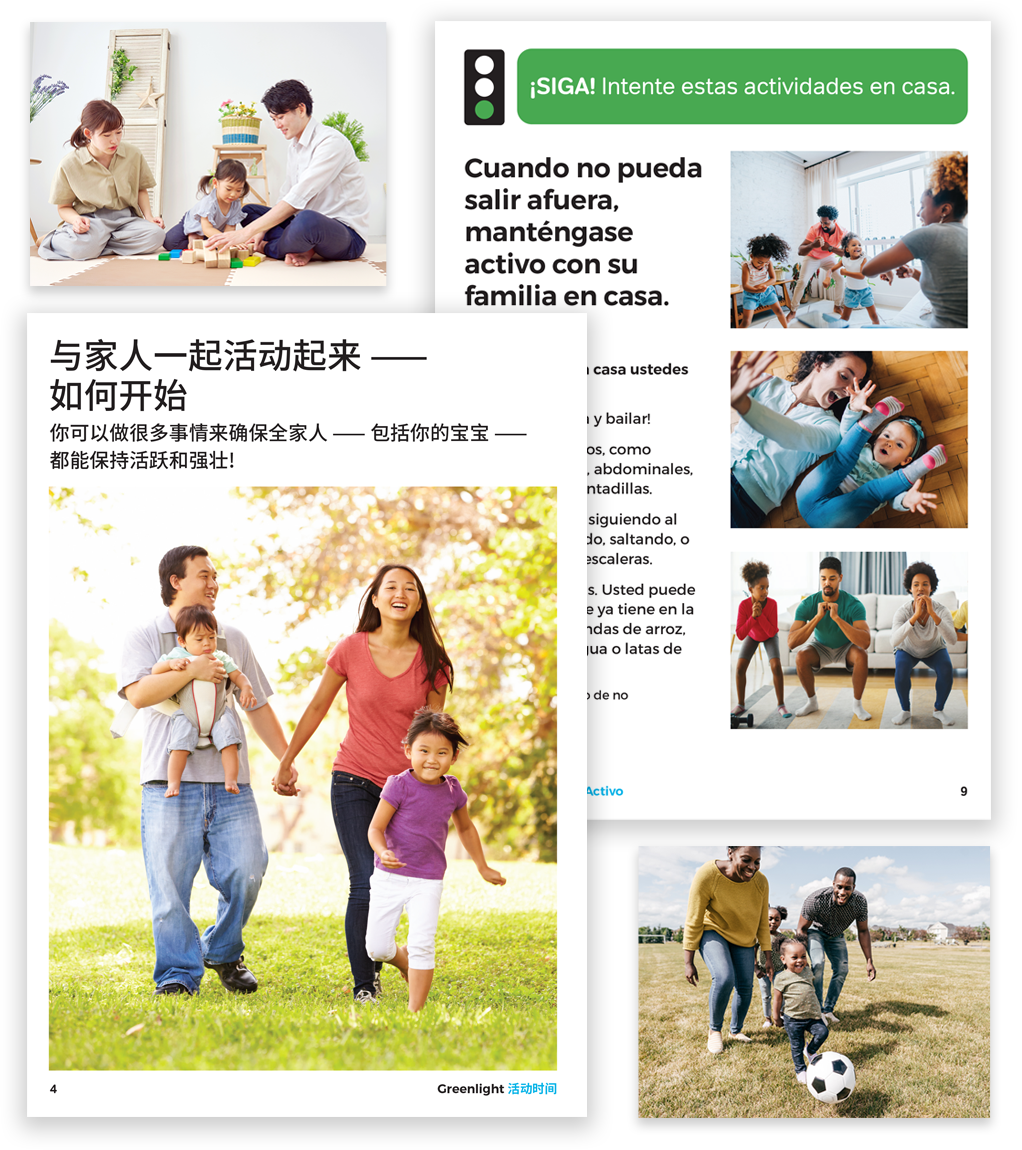
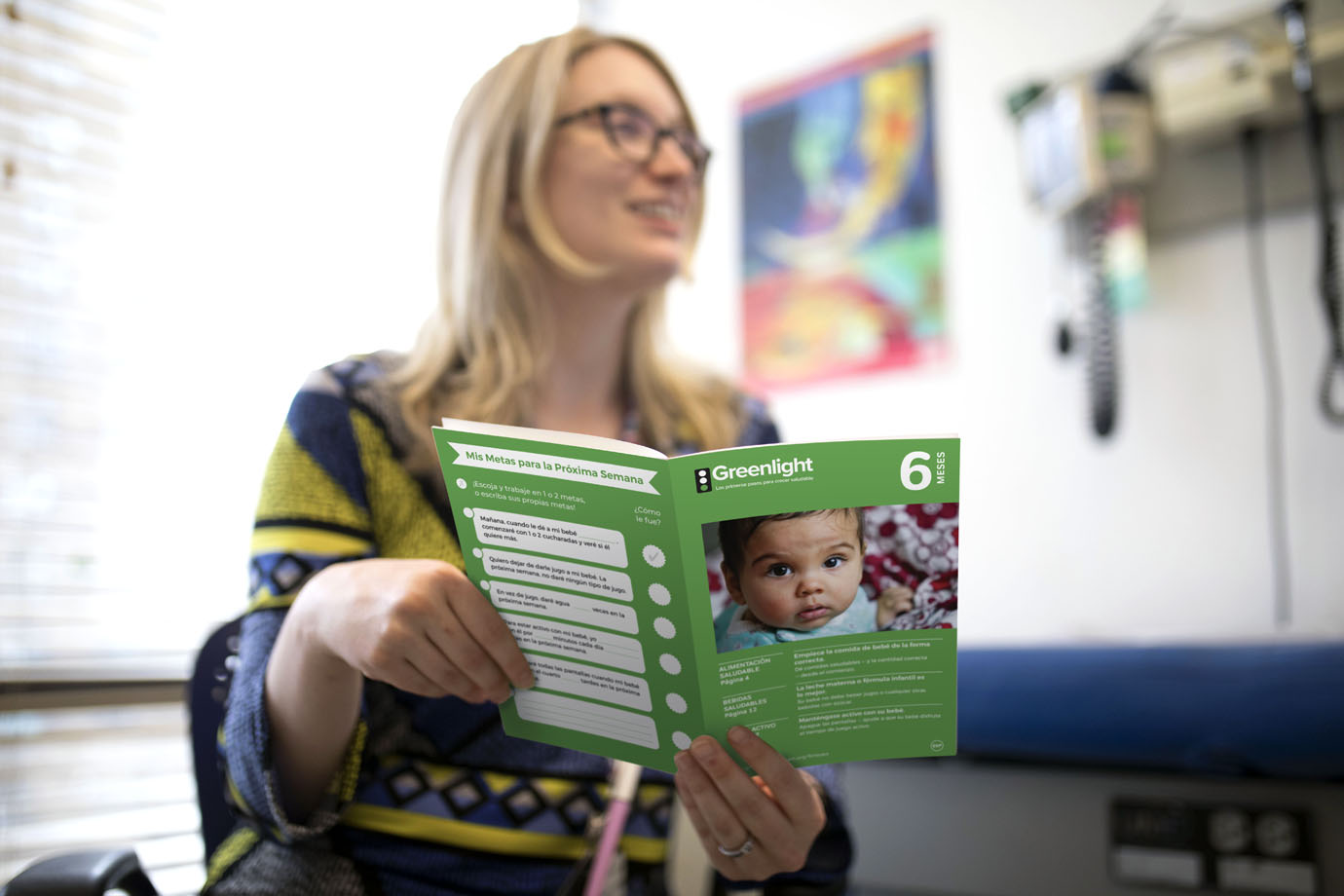
When adapting Greenlight for a Chinese population, the importance of extended families was a recurrent theme that we heard from both parents and providers in 1:1 interviews as well as in focus groups. This led us to increase our emphasis on grandparents within both the text and images as seen in the Active Time topic booklet for Chinese families.

Cultural Appropriateness – Photos and Images of Families

We carefully chose photos and images which reflect the families we serve in a positive way.

Cultural Appropriateness – Photos of Food

Extensive input from families and providers was used to plan special photoshoots to ensure that the foods shown in the Greenlight booklets not only modeled correct age-specific portion sizes, but also were culturally acceptable. At times, however, we did include some foods less common from a cultural standpoint, which families might wish to consider.

Common Themes

Key Messages and Goal Setting

The cover of each booklet shows the 3 key messages to focus on. Each message is shown within a “green” traffic light circle. The very last page of each of the core booklets is dedicated to parent goal-setting.

Food content and quantity

Each of the core booklets provides age-specific information on food recommendations — including: How much?
How often?
What food?

Visuals To Show Portion Sizes and Sample Menus

Every booklet has lots of photos and pictures of correct portion sizes and sample menus. Providers are encouraged to use these images as they talk to families at their child’s check-up.

Traffic Light Color Theme

We use a traffic light color theme to support our messages:

Green = Good for your baby! Give your baby

Yellow = Not so good. Try not to give.

Red = Bad for your baby. Don’t give!

CONTACT US
© 2026 Greenlight
Contact Us / Terms & Conditions / Privacy Policy