Greenlight Booklets
The booklets are the centerpiece of Greenlight. Specially designed age-specific booklets help parents focus on the most important things they can do to keep their child growing healthy and strong.
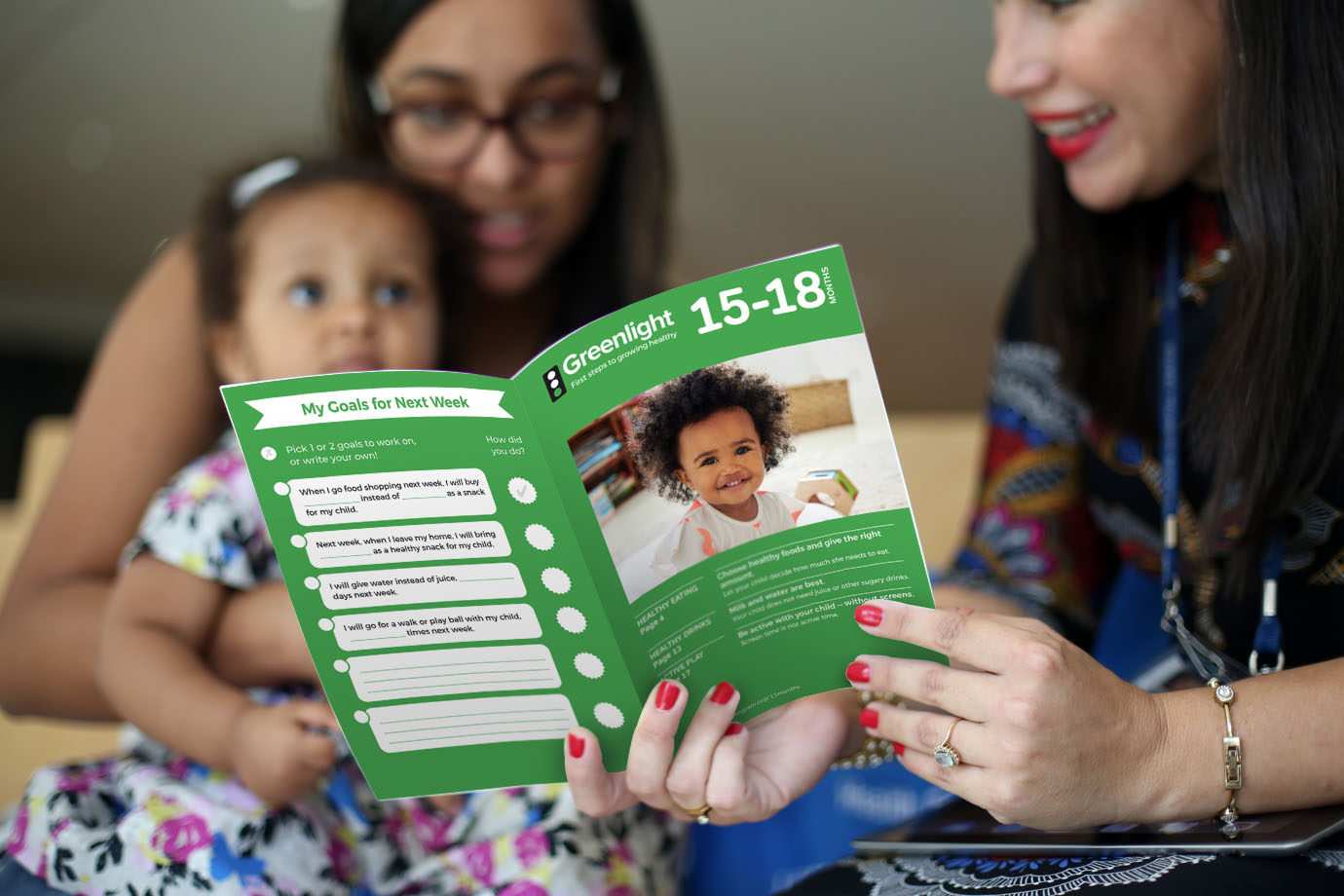
We used an evidence-based, systematic approach to decide on the key content for Greenlight. The booklets were carefully designed using health literacy principles to support parent ability to act on key messages – and to help providers to communicate more effectively.
The Greenlight booklets are written at a 6th grade reading level, with lots of photos and images – benefitting both parents and providers. Using the booklets as part of verbal counseling helps providers choose simple language that engages families while reinforcing key age-specific, action-oriented messages. Photos and sample menus were carefully chosen to help families visualize different foods to try, with age-appropriate portion sizes. The last page of every core booklet is a “goal-setting” page – where parents can work with their provider to identify and write down 1-2 specific goals they hope to accomplish in the upcoming few weeks
All booklets are currently available in English, Spanish, Chinese (Traditional), and Chinese (Simplified). There are two main kinds of Greenlight booklets – “core” booklets and supplement booklets.
Core booklets
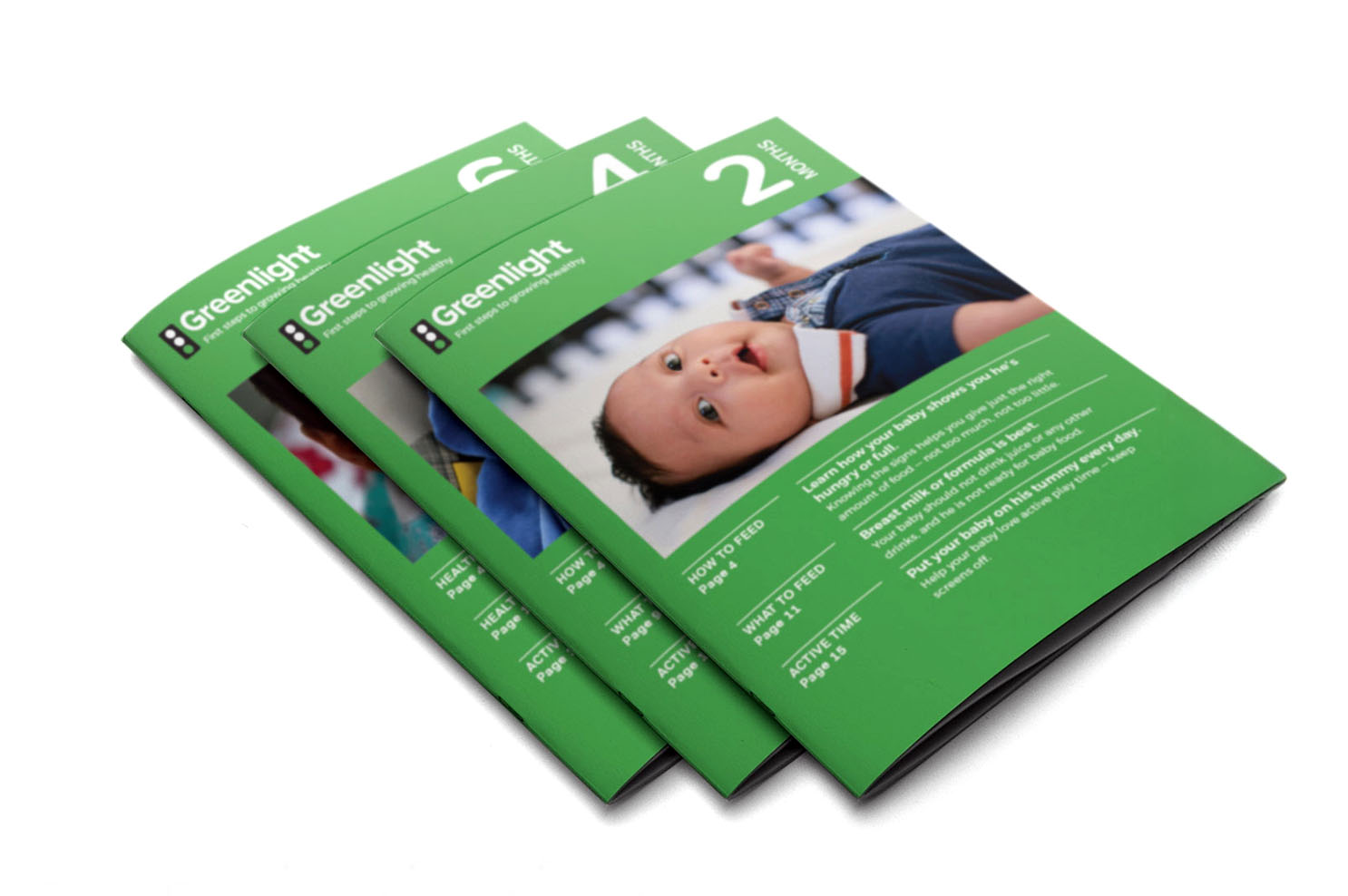
Each of the specially designed “core” booklets focus on 3 main age-specific messages. Booklets are made to be given out at each well-child check-up during the first 2 years of life: at 2, 4, 6, 9, 12, and 15-18 months.
Topic booklets
Supplemental booklets explore additional important topic-specific issues.
1 Breastfeeding 
Experts agree that breast milk is the healthiest milk for babies. The American Academy of Pediatrics recommends exclusive breastfeeding through 1 year of age.
This booklet discusses:
- The benefits of breastfeeding for both mother and baby
- How to keep breastfeeding – even when mothers go back to work
- The importance of mothers taking care of themselves, so they can take the best care of their babies
- Where to go for help if mothers are having trouble breastfeeding
2 Giving formula 
For mothers who give formula for their babies, this booklet provides important information on the following topics:
- Satiety cues — learning how the baby shows he is hungry or full
- How to decide if the baby is getting enough formula
- Giving only milk — no baby foods until 6 months of age
- Mixing the formula just right
3 Screen time 
For babies and toddlers, screen time means less time to be active. Not having enough physical activity has been linked to obesity. Consistent with recommendations from the American Academy of Pediatrics, this booklet advises that children under 18 months should not watch anything. Reasons for this are discussed, as well as tips for other activities to do with young children.
4 Sleep time 
New research shows that lack of sleep is linked to obesity. Problems related to sleep are often intertwined with feeding issues. This booklet guides parents on how to help their baby learn good sleep habits — it is best to start when they are young! Divided into sections by age (“newborn to 5 months”, “6-12 months” and “12-18 months”) this booklet provides important tips, including how to:
- establish bedtime routines
- teach babies to fall asleep on their own
- address night time awakenings
5 Healthy eating — for adults and children over 3 years 
When a new baby joins the family, it’s a good time to try to make healthy changes for the whole family. This booklets provides concrete tips on how to:
- Tackle common eating problems
- Plan a healthy breakfast, lunch, and dinner
- Fit 5 servings of fruits or vegetables in one day
- Get children to eat healthy by having them “help” with food shopping and food preparation
6 Active time — for the whole family 
Getting the whole family involved makes it easier for everyone to stay active. This booklets provides concrete tips on how to:
- Start being active with your families
- Stay active — outside or inside
- Be active with your baby